Bring your dream garden to life by borrowing ideas from today’s most wanted styles.
Key overview: Three popular garden design ideas and how to create them
- Coastal garden: Combine hardy grasses, succulents and a colour palette of soft greens, silvery foliage and sandy tones. Pair with natural materials in your paving and decking.
- Modern native garden: Feature trees work well and choose plants that thrive naturally in your local climate. Layer shrubs and groundcovers as they occur in nature to create a resilient garden.
- Wild flower garden: The aim is to emulate nature with seed heads, spent flower spikes and ornamental grasses. While the planting is the hero, complement the design with Informal gravel paths, stepping stones, weathered timber and natural stone boulders.
A well-designed garden feels effortless, with every element working together to create a cohesive and inviting space. It all starts with a clear design direction – this helps guide every decision, from selecting plants to choosing pots and paving, so the finished garden feels unified rather than pieced together over time. We explore three garden design ideas and ask experts to share their tips for re-creating each landscape style at home.
Tip: Always wear the appropriate safety equipment (safety glasses, gloves, ear muffs and a mask, for example) and always follow the instructions for the product or equipment.
How to design a coastal garden
Relaxed and inviting, coastal gardens capture the easy going feel of life by the sea.
- Go for soft greens, silvery foliage and sandy tones combined with natural materials to create a landscape that feels timeless and informal.
- Use a practical approach to planting. Landscape designer Katie Budd of Budd Landscape Design says coastal gardens are shaped by resilience, favouring hardy grasses, succulents and fine-leaved plants that cope with exposed conditions while adding texture and subtle movement.
- You don’t need to live by the coast to recreate the look. “Use sweeping drifts of grasses and low-growing groundcovers to soften edges, and repeat a limited selection of plants throughout the garden to create rhythm,” says Katie.
- A restrained palette, repeated planting and relaxed layout are the hallmarks of the style. Katie says, “Complete the look with weathered timber decking, natural-stone crazy paving and gravel paths for an informal, relaxed feel.”
- Resist the temptation to introduce too many colours, plant varieties or formal elements.
What are the key plants for a coastal garden?
- Pigface (Carpobrotus glaucescens): A salt-tolerant, hardy native groundcover.
- Agave ‘Blue Glow’: This slow-growing hybrid produces pups that can be shared.
- Coastal daisy (Brachyscome spp): A tough native shrub, it brings floral prettiness.
- Swamp she-oak (Casuarina glauca): In prostrate form, this is known as ‘Cousin It’.
- Blue fescue (Festuca glauca): Adds soft movement in a smoky blue-grey hue.
How to design a modern native garden
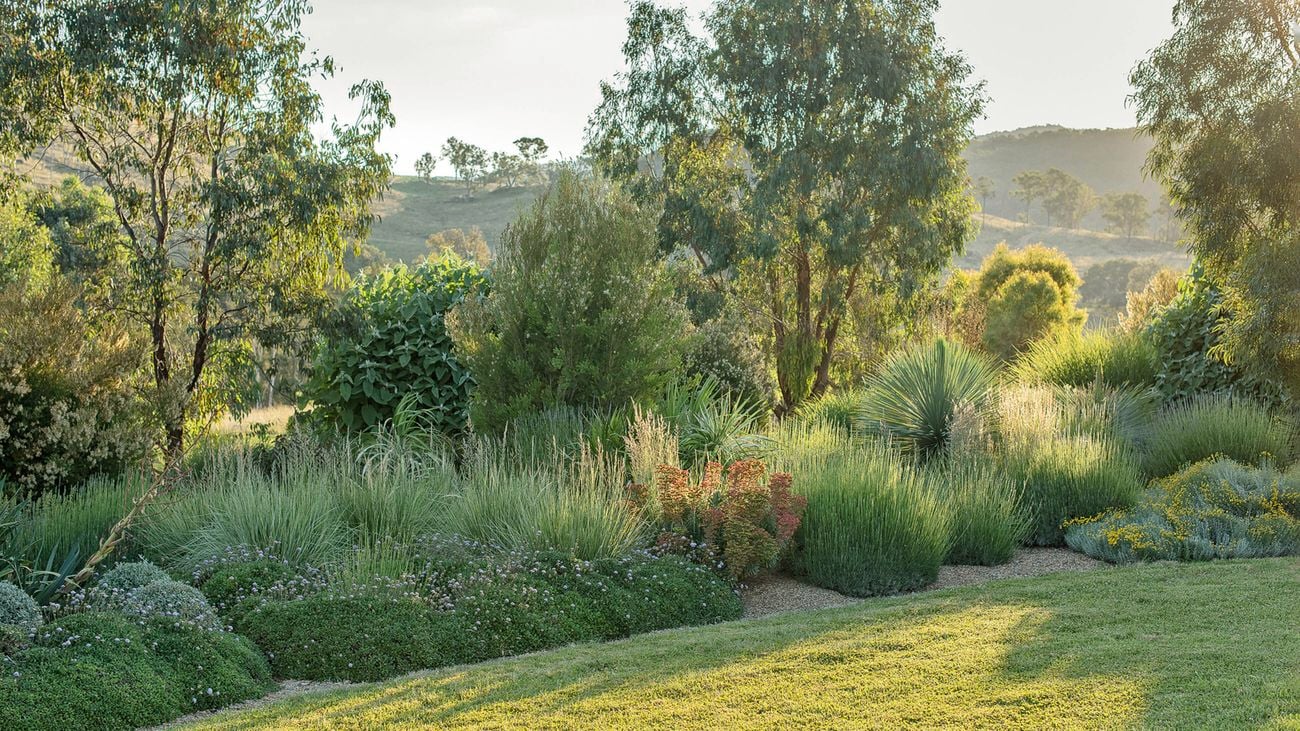
Contemporary native gardens celebrate bold Australian plants within a clean, uncluttered design.
- Balance layered planting with generous open spaces rather than filling every corner, using lawn or gravel to create breathing space, frame the garden and bring a sense of calm.
- A sculptural feature tree provides a strong focal point, while gravel or decomposed granite paths, weathered timber, natural boulders and rusted steel edging provide structure without competing with the planting. “The hardscape should recede into the planting rather than dominate it,” says Katie.
- Draw inspiration from the surrounding landscape for the planting palette, favouring species that naturally thrive in your local climate and soil. “Native gardens are designed by choosing plants that naturally occur in your local area, then layering trees, shrubs and groundcovers as they occur in nature,” says Katie. “The aim is to create a resilient, low-input landscape that supports biodiversity while working with nature, rather than against it.”
- Prune seasonally. One of the biggest misconceptions is that native gardens look after themselves. “Native gardens are often mistaken to be ‘no maintenance’,” says Katie. “While they generally have lower water requirements once established, they still benefit from seasonal pruning to prevent plants becoming straggly, along with shaping trees to ensure the garden stays healthy and well formed.”
What are the key native plants for a native garden?
- Grass tree (Xanthorrhea spp): Needs well-draining soil as it hates wet feet.
- Native fuchsia (Correa spp): It produces delicate flowers that can be two-toned.
- Dwarf flowering gum (Corymbia ficifolia var): Nectar-filled blossoms in a range of colours.
- Coast banksia (Banksia integrifolia): This hardy tree is a bee favourite in winter.
How to design a wild flower garden
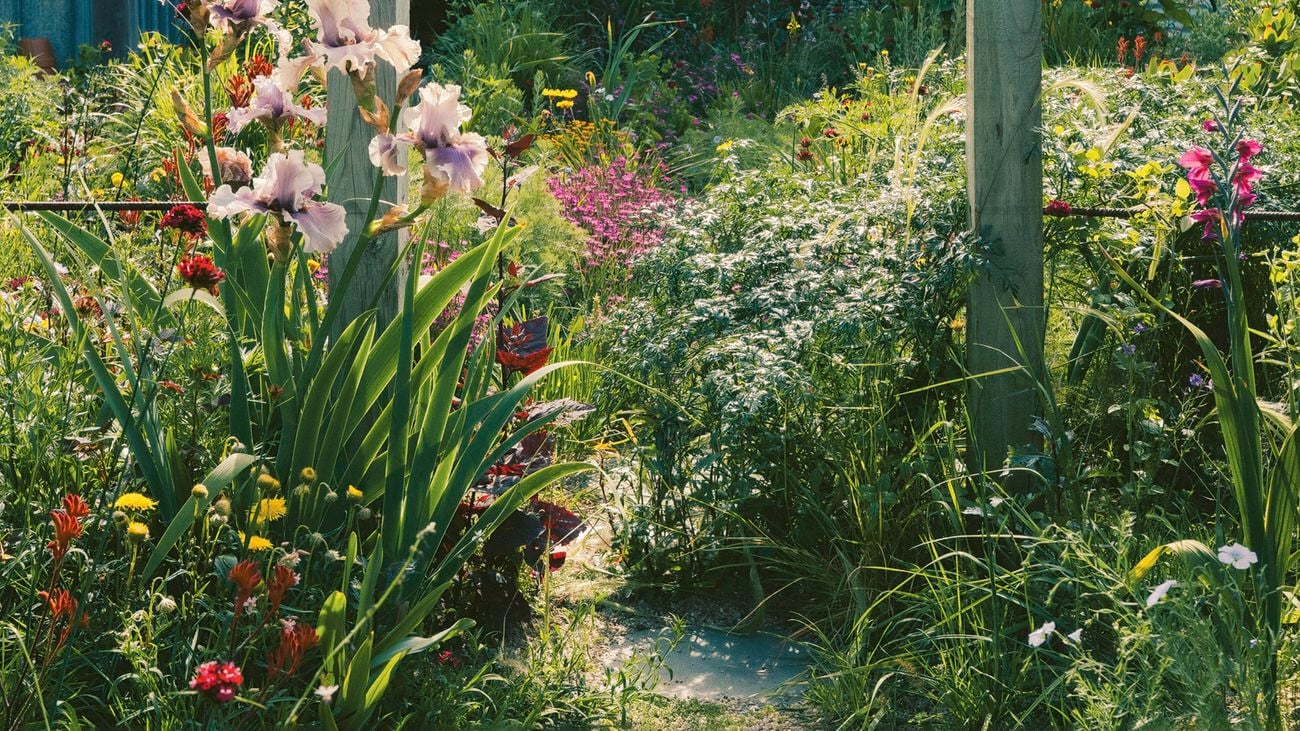
Inspired by the way plants grow in the wild, naturalistic (sometimes called wild flower gardens) embrace a softer, more relaxed approach to planting.
- Plant in generous drifts and overlapping layers, rather than showcasing individual specimens, allowing ornamental grasses, flowering perennials and shrubs to weave through one another and evolve with the seasons. “Naturalistic gardens are planted, designed and managed with considered emulation of nature,” says horticulturist, designer and Flower Power author Jac Semmler.
- Allow planting to soften the edges of paths and garden beds, spilling naturally into adjoining spaces rather than ending in crisp, formal borders. The style embraces a looser approach to maintenance, with seed heads, spent flower spikes and ornamental grasses left standing to provide texture and seasonal interest throughout the year.
- Keep landscaping understated so that it complements, rather than competes, with the loose, naturalistic planting recommends Katie. “Informal gravel paths, stepping stones, weathered timber, natural stone boulders and simple Corten steel edging quietly define the space while allowing the planting to remain the hero,” she says.
What are the key plants for a wild garden?
- Crepe myrtle (Lagerstromia spp): This heat-loving deciduous tree produces masses of beautiful blooms. Dwarf forms are available.
- Coneflower (Echinacea spp): Popular for its long blooming season, its insect-attracting flowers come in purple, white, pink or yellow.
- Mexican sage (Salvia leucantha): Fast-growing and water-wise, this compact bush softens borders with gently waving blooms.
- Yellow buttons (Chrysocephalum apiculatum): A compact, adaptable groundcover, it loves rock gardens and full sun.
Keep in mind…
- Wear gloves and a mask when handling mulch, compost and potting mix.
- Take care when selecting your plants as some can be poisonous to children and pets, and check their suitability for your region, as some may be classified as weeds in certain states and territories.
Want to start your garden from scratch?
Read our article on how to design a landscaping plan.
Photo credit: James Moffat, Nicholas Watt, Sarah Pannell.


 Lowest Price Policy^
 Free delivery* with
 4 hour Click & Collect
 Easy in-store Returns


 Get Inspired
 Ask Questions
 Share Projects