These hot-weather tips can transform how your space feels, now and for years to come.
Key overview: Best home design ideas to cool your house during summer
- Use your roof as the home’s central cooling system. A light colour roof, solar panels, insulation or a roof garden can all help.
- When renovating or building, factor in local climate concerns such as sun and wind direction.
- Consider the positioning of windows, ideally place bedrooms on lower floors and place heat-generating appliances on external walls.
- Use ceiling fans and open windows after dark to let in cool air.
- Outdoor spaces will be cooler with as much grass coverage as possible.
- Make use of shade trees where possible and use shade cloths, market umbrellas or gazebos to create shade where it’s needed.
Sweating about climate change? Rising temperatures are turning Aussie summers into an endurance test. Thankfully, mindful design can make our homes more comfortable, even when the mercury soars. Whether you’re renovating, building or searching for budget-friendly fixes, these ideas for how to cool down your home can help beat the heat.
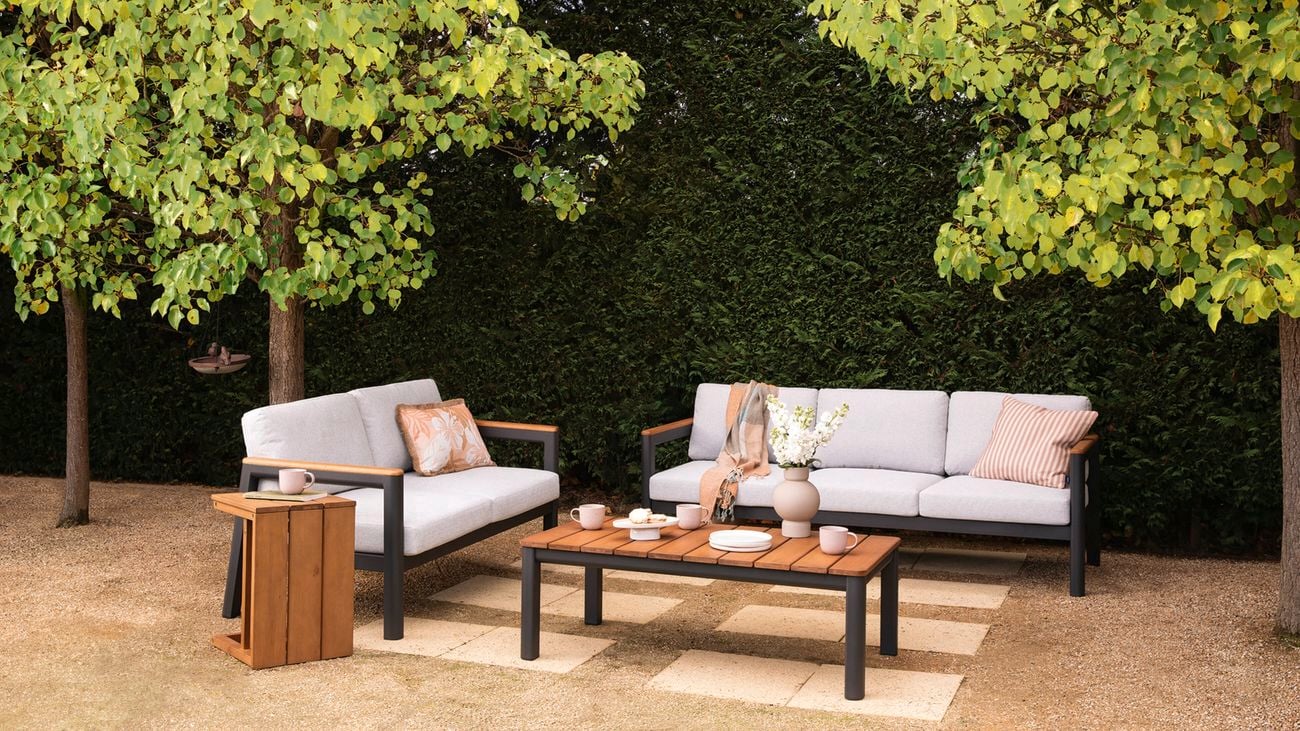
How your roof can help your home stay cooler
Your roof takes the full force of the sun’s rays, so these smart choices will be your first line of defence against heat:
- A lighter colour roof. Research shows dark roofs to be massive heat magnets1; but a lighter colour roof – or ‘cool roof’ – reflects summer heat, reducing heat gain in your home2.
- Solar panels can shade the roof while redirecting solar energy into electricity.
- A garden or green roof can help to insulate and shade a building and so reduce heat gain but may require local council approval and professional advice3.
- Roof insulation will reduce heat gain into the house below – and reduce heat loss in winter. Make sure the roof space is ventilated with fans or whirlybirds to release hot air.
How to future proof your home when building or renovating
When building or renovating, start by responding to the site, and consider:
- Which direction do the sun and wind come from?
- What are the primary climate concerns of the area? A tropical zone is all about breezes, while temperate zones require a balance between solar warmth in winter and protection from heat in summer. Most of us fall into the latter category, so the goal is to optimise windows on the north side – which can be shaded by eaves in summer, and let in warmth in winter – and minimise windows on the west.
- How to design your floor plan with heat in mind. Heat rises, so ideally bedrooms are located on lower levels, rather than upstairs. Position the kitchen away from sleeping zones and place heat-generating appliances on external walls.
Think about whether your home will rely on natural ventilation, air conditioning or both. Australian Government site YourHome.gov.au describes a hybrid design, with a mix of ‘free running’ spaces cooled by air movement on the perimeter, and ‘conditioned’ rooms in the centre or the house4.
Best ways to cool your house using fans and windows
Air movement is key to passive cooling your home. Try these tips to maximise ventilation:
- Identify the prevailing winds, then position windows to invite breezes in and carry hot air out on the opposite side.
- Top-floor windows and roof vents are best to drive out the rising heat.
- Louvres and high clerestory windows allow air to travel without compromising security, so they can be left open when you’re out – or after dark to benefit from the cool night air.
- Ceiling fans are another winner, even if you have aircon. Your Home says you can reduce aircon use by up to 75 per cent just by adding ceiling fans, as the latter is best at washing air over people, evaporating perspiration and lowering a room’s perceived temperature5.
How to use green surfaces to cool your space
Compare the brutal burn of sun-soaked pavers to the blissful cool of grass underfoot and you’ll see there is a big difference between hard and green surfaces outside. Landscape designer Ian Barker of Ian Barker Gardens has a simple rule for home design ideas for paths, decks and driveways – work out what you need and only what you need, and then everything else should be green life.
- For driveways, he suggests the width of the car plus a metre on either side, no more.
- Entertaining spaces are often supersized, but Ian says to treat them like an internal living room. “A huge room with a normal-sized lounge setting in it would look really awkward and the outside is the same. Our go-to for an outdoor entertaining area is 4.5m x 6m.”
- For decking, your choice of materials makes a difference too, with dark pavers and decking retaining heat much more than light ones. “If you’ve got a protected south-facing space, feel free to use whatever colour material you like. If you have a north-facing heat pocket, use lighter colours,” says Ian. “Just don’t go too light or you could end up with glare.”
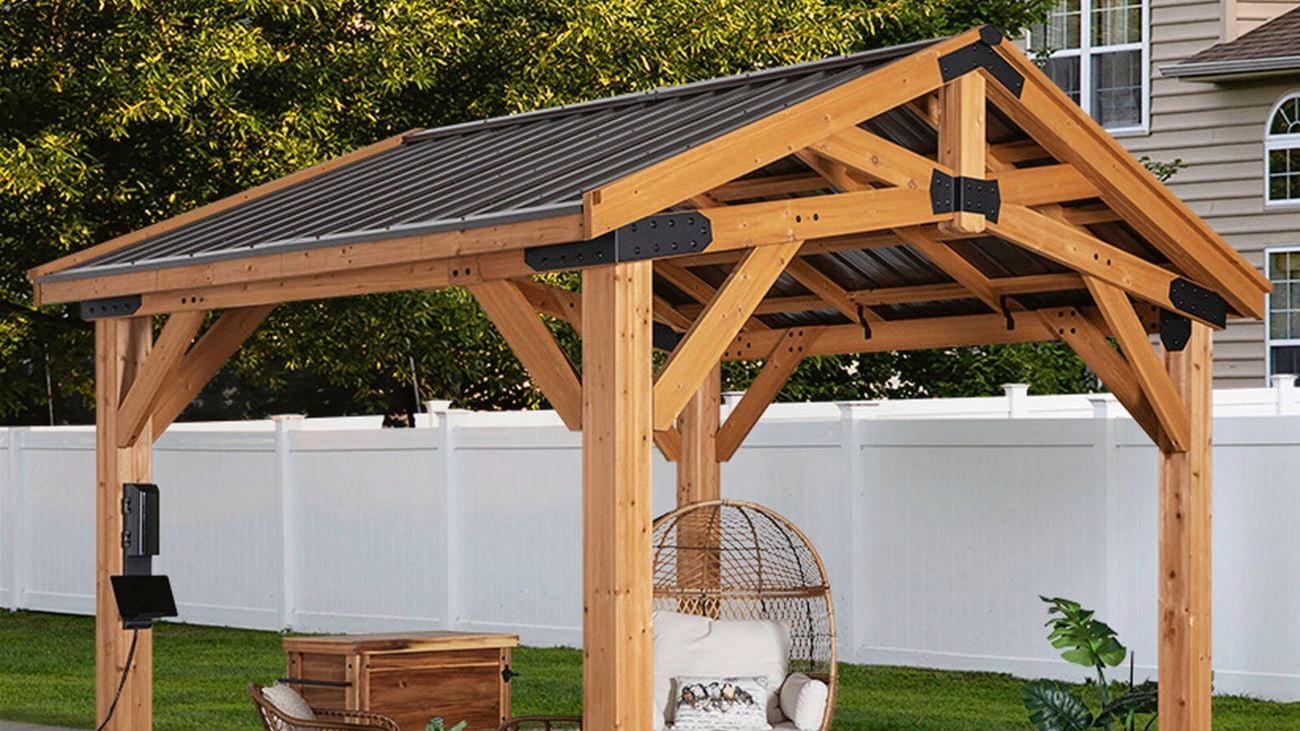
How to use trees and shade to cool your home
Strategic use of greenery and shade are other great ways to beat the heat:
- Use trees as sun protection. “If you have a well-positioned tree that creates natural shade on your roof, the cooling effect and money saved on power will, in all probability, outweigh the cost of maintenance on that tree,” explains Ian. Deciduous varieties are the gold standard, delivering shade in summer and letting in sun through bare branches in winter, with Ian’s favourites including Japanese maples, gingko and crepe myrtles.
- Opt for greenery over giant paved areas. If a traditional lawn is too much effort, Ian likes other groundcovers. “My front yard is dwarf mondo grass and the maintenance is virtually nil,” he says.
- Use shade cloths. These are the most flexible, budget-friendly choice for sun-scalded outdoor zones – ideal for temporary shading and as a rental solution.
- Market umbrellas are a great option for tenants, as they work in small spaces and can be moved around easily.
- A pergola or gazebo is a great permanent cooling solution, says Chris Pendrey of Coolaroo. “The most effective shade structures block direct solar radiation while still allowing hot air to escape, helping limit heat build-up,” he says. “Louvre-style gazebos allow adjustment of the roof to block sun at different times of day while still allowing airflow. Panels and screens can be added to block low-angle sun from the sides and create a customised retreat for your yard.”
Looking to add a water feature to your garden?
Read our article on how to make a solar powered water feature.
Photo credit: Martina Gemmola, Backyard Discovery.
Sources:
1. Australian Housing Data: Cool Roofs
2. energy.gov.au: Light Coloured Roofs
3. Your Home: Green Roofs And Walls
4. Your Home: Passive Cooling
5. Your Home: Passive Cooling


 Lowest Price Policy^
 Free delivery* with
 4 hour Click & Collect
 Easy in-store Returns


 Get Inspired
 Ask Questions
 Share Projects