


 Lowest Price Policy^
 Free delivery* with
 4 hour Click & Collect
 Easy in-store Returns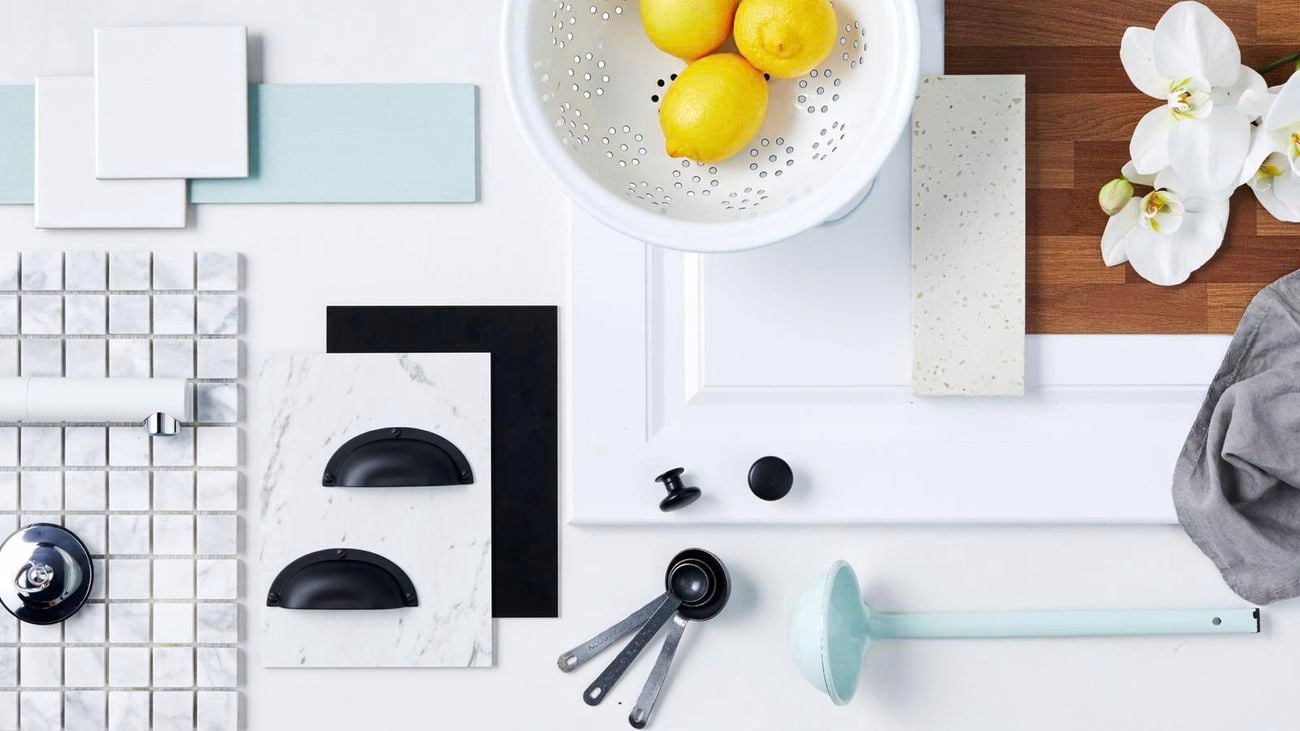

Special Order

By /

When building a new kitchen, layout and workability are paramount, but it’s also essential to choose the right finishes – with so much time spent in the kitchen, you need to pin down a look you’ll love. As interior designer James Treble (jamestreble.com) also points out, most kitchens in Australian homes are open plan. This means they are usually on show from all the key living areas, so the finishes are important.
“Collate inspiration, whether it be images, textures or materials, and then place them onto a visual moodboard,” says Kaboodle’s Briony Mikrou. “This will give you a clear vision of your style and colour and will help to determine the direction, look and feel.”
Browse Instagram and Pinterest, and take photos of whole rooms or elements that speak to you. “A moodboard might include samples of laminate for cabinetry, stone benchtop, splashback tiles or glass, flooring, paint colour and a window covering sample,” says Andrea Lucena-Orr from Dulux. Put all your physical samples together in good light, so you can see how the colours and textures match – or don’t!
James says he always starts with the flooring. This serves as the base for the palette he develops, which should also reflect the style of the rest of the house and result in a cohesive look and feel.
Look at cabinetry next. “A flat profile, which is more modern with clean lines, usually has a wider range of finishes and colour options, while a Shaker profile may have a more limited range of colours,” says James. “I usually start with the limited ranges of finishes first and put those into place.” Follow with those surfaces that also have a narrower choice of colours, such as benchtops.
“There are many more options in paint colours than any other materials,” says Andrea. “So the paint colour selection should come at the end of your fixtures and fittings selection.”
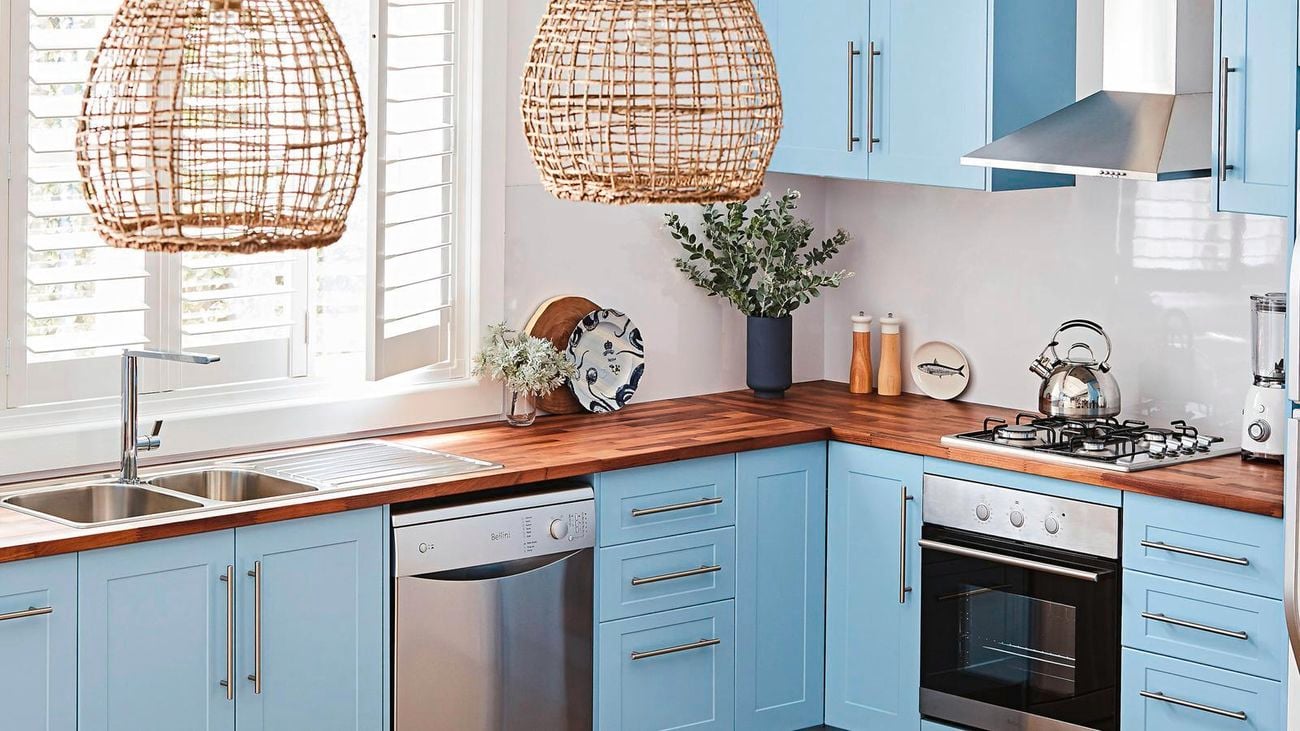
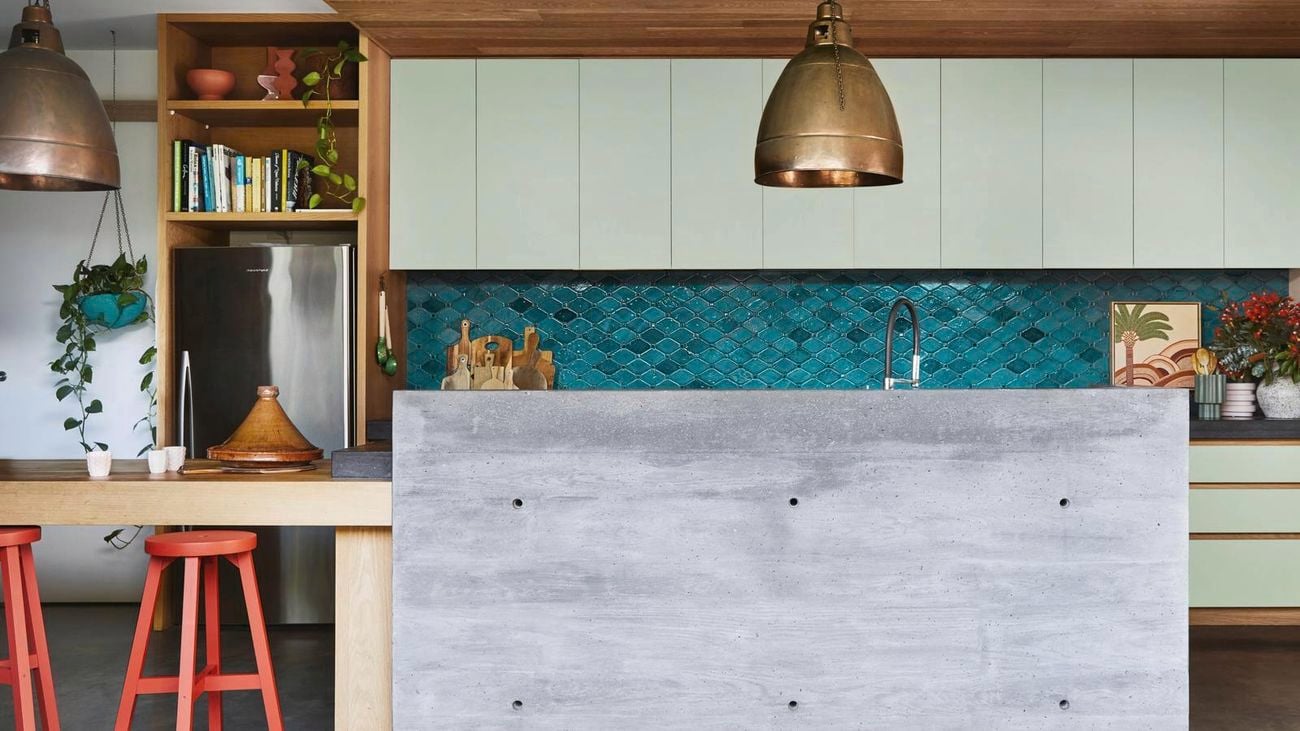
Andrea suggests connecting the colour in the kitchen to the rest of your home. Natural colours – both light and dark – are very much on trend for kitchens. “We have gone through the past decade of darker benches, but now you tend to see lighter to mid-tone benchtops,” says Andrea. “Cabinets tend to be different shades of white or neutral as well as block colours in subtle blue or green (Hamptons style), or darker blues, greens or charcoals for a more dramatic look.”
Dark hues can be intimidating for some, but it’s all about what you match them with. “They add more mood and contrast, and you can still freshen it up with a lighter splashback or benchtop,” says James.
If in doubt, James advises going for a white kitchen because it goes with everything. White cabinetry will brighten up a space as it reflects light well, adds Briony. “It will always be a smart choice for compact kitchens to make the space feel lighter and larger,” she explains. A white kitchen can easily be enlivened by bolder-coloured accessories or appliances, or with interesting taps or handles.
Have a look at our advice on how to plan for an ‘invisible’ kitchen
Photo Credit: Kaboodle Kitchen, Dulux Australia, James Moffatt, Sue Stubbs, Gap Interiors/Anne-Catherine Scoffoni

Asbestos, lead-based paints and copper chromium arsenic (CCA) treated timber are health hazards you need to look out for when renovating older homes. These substances can easily be disturbed when renovating and exposure to them can cause a range of life-threatening diseases and conditions including cancer. For information on the dangers of asbestos, lead-based paint and CCA treated timber and tips for dealing with these materials contact your local council's Environmental Health Officer or visit our Health & Safety page.
When following our advice in our D.I.Y. videos, make sure you use all equipment, including PPE, safely by following the manufacturer’s instructions. Check that the equipment is suitable for the task and that PPE fits properly. If you are unsure, hire an expert to do the job or talk to a Bunnings Team Member.


![A white planter box filled with green plants and pink flowers, with a white welcome sign behind it that reads "Let's Celebrate". [[2609] MAK...me sign_V1 | Word]](https://media.bunnings.com.au/api/public/content/2dd590054121413e926a0cc0085cc6b8?v=f20d7a7b&t=w300dpr2)


 Get Inspired
 Ask Questions
 Share Projects