


 Lowest Price Policy^
 Free delivery* with
 4 hour Click & Collect
 Easy in-store Returns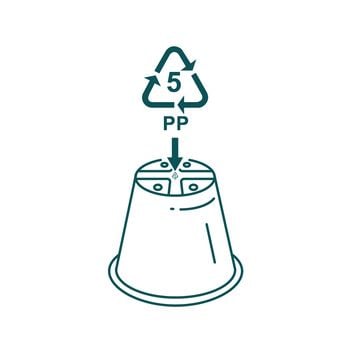

Sustainability & Recycling
How to reduce food waste at home

Did you know that empty plant pots can’t be accepted at most council recycling facilities? To help with this, Bunnings is collecting used plastic plant pots and other plant packaging (such as stakes and labels) at selected stores.
Simply return your plastic plant pots and stakes to your nearest participating store and, together with our program partners, we’ll help recycle them into items such as new pots, creating a circular and more sustainable solution. Customers are also welcome to take returned items home for reuse free of charge.
We accept plastic plant packaging made from polypropylene plastic 5 (otherwise known as PP5). This includes all sizes of plant pots, labels and stakes.
To find out what type of plastic your pot is made from, look for the plastic identification code on your pot. If it has a number ‘5’, you can recycle it with us.
Alongside our program partner, the pots are recycled onshore, here in Australia.
Returned pots are first shredded into plastic pellets. They can then be transformed into items such as brand-new plant pots, creating a completely circular solution.
It’s easy! First, check that your pots are made from PP5.
Next, tap out any loose soil from inside your pots and give them a quick rinse. This is an important step, as the machinery used to recycle the plastics can be damaged by dirt.
Then stack your pots and drop them off in the collection cage we’ve set up outside our nursery gate at your nearest participating Bunnings store.
This service is available at selected stores across Victoria, New South Wales, the Australian Capital Territory, Queensland, Tasmania and Western Australia.
The following stores are ready to collect your pots and stakes:
Asbestos, lead-based paints and copper chromium arsenic (CCA) treated timber are health hazards you need to look out for when renovating older homes. These substances can easily be disturbed when renovating and exposure to them can cause a range of life-threatening diseases and conditions including cancer. For information on the dangers of asbestos, lead-based paint and CCA treated timber and tips for dealing with these materials contact your local council's Environmental Health Officer or visit our Health & Safety page.
When following our advice in our D.I.Y. videos, make sure you use all equipment, including PPE, safely by following the manufacturer’s instructions. Check that the equipment is suitable for the task and that PPE fits properly. If you are unsure, hire an expert to do the job or talk to a Bunnings Team Member.


